
Views: 0 Author: Site Editor Publish Time: 2026-01-30 Origin: Site


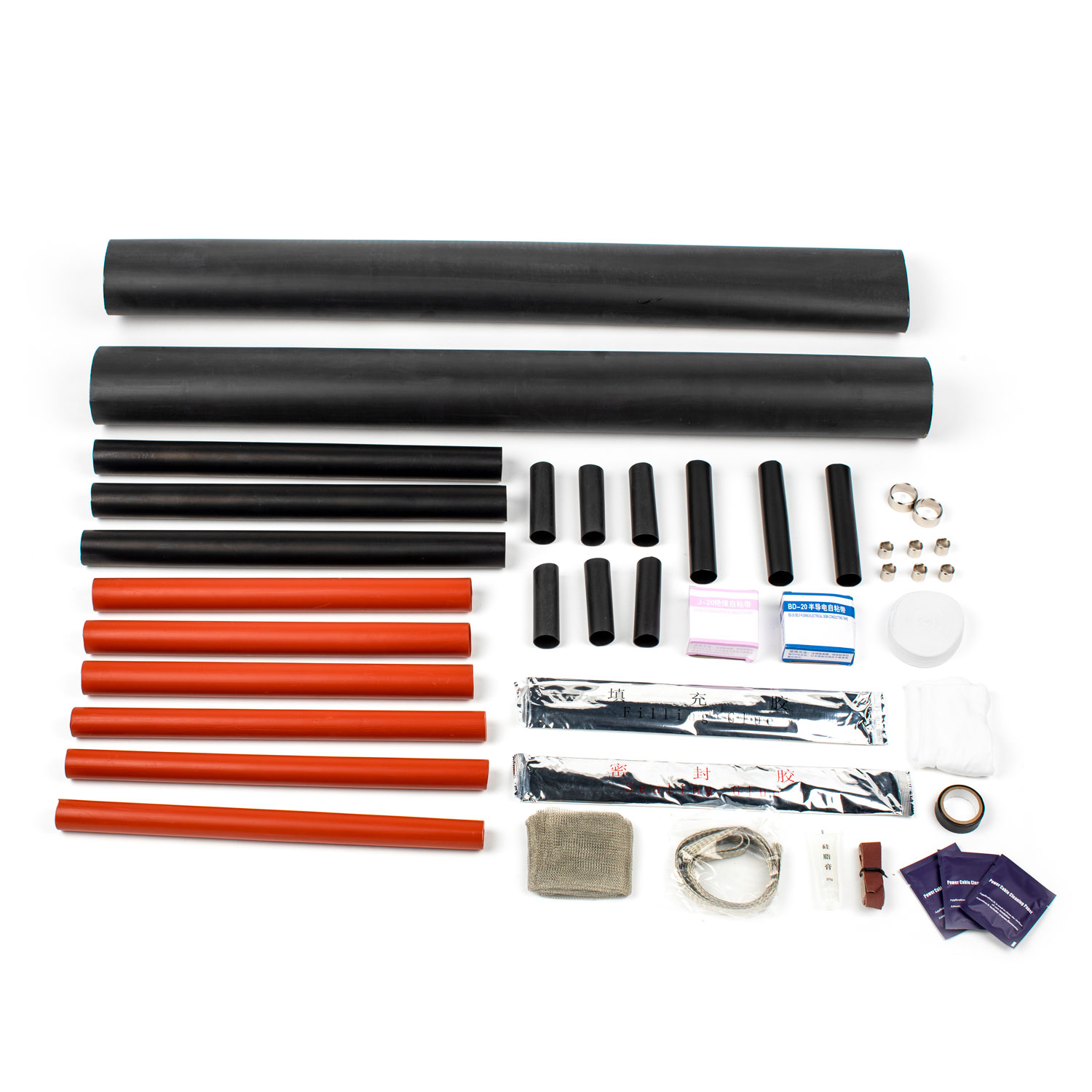
As global power grids modernize and underground cable networks expand, the demand for reliable, long-lasting HV cable joints intensifies. A joint is a potential weak link, a discontinuity where electric field management, mechanical integrity, and environmental sealing are paramount. Two primary philosophies have evolved: the prefabricated joint, a factory-engineered system delivered as a complete kit, and the field-assembled (taped) joint, where critical components like insulation and screening are built up layer-by-layer on-site using insulating and semi-conductive tapes. The choice between them is not merely a matter of preference but a calculated decision based on technical and operational constraints.
Technology Breakdown & Comparative Analysis
· Core Principle: The joint comprises pre-molded rubber (typically EPDM or Silicone) components that slip over the prepared cable ends. These components integrate the conductor connector, a pre-engineered stress control system (geometric or capacitive), and factory-tested interfaces for insulation and outer sealing in a single, coherent unit.
· Key Advantages:
· Consistent Quality & Reliability: Manufactured and tested under controlled factory conditions, ensuring repeatable, high-grade electrical and mechanical properties.
· Reduced Installation Sensitivity: Less dependent on the installer's skill for the core electrical performance. The critical stress control geometry is fixed.
· Faster Installation: The process is largely assembly-oriented, reducing on-site labor time, especially beneficial in restricted outage windows.
· Superior Interface Design: Advanced rubber formulations and interface pressures provide excellent long-term sealing against moisture and partial discharge.
· Inherent Limitations:
· Lower Configuration Flexibility: Requires exact cable dimensions and is typically designed for specific cable types. Field modifications are impossible.
· Higher Unit Cost: The extensive factory engineering and testing lead to a higher initial product cost.
· Inventory Complexity: Requires stocking specific joint kits for each cable type and size.
· Core Principle: This technology relies on the sequential application of compatible insulating tapes (often PVC, PE-based) and semi-conductive tapes directly onto the cable at the joint location. The installer manually builds the insulation wall, stress control cones (using geometrically shaped tapes), and the overall protective envelope.
· Key Advantages:
· High Flexibility & Adaptability: Can accommodate a wide range of cable diameters, types, and even non-standard configurations through the manual process. Ideal for legacy or diverse cable fleets.
· Lower Material Cost: The raw materials (tapes, compounds) are generally less expensive than a complete prefabricated system.
· Simplified Logistics: Requires only a stock of generic tapes and accessories suitable for a range of cables.
· Inherent Limitations:
· High Skill Dependency: The joint's ultimate performance is almost entirely a function of the installer's expertise, consistency, and meticulousness. Voids, wrinkles, or contamination during taping are critical risks.
· Longer, Less Predictable Installation Time: The layered build-up is time-consuming and susceptible to weather delays on-site.
· Potential for Higher Lifetime Cost: While material costs are lower, the risks of early failure or required re-work due to installation flaws can lead to significantly higher total lifecycle costs.
· Sealing Challenges: Achieving a hermetic, longitudinally waterproof seal with taped systems is generally more challenging than with pre-molded rubber.
The optimal selection emerges from a project-specific evaluation matrix:
· Choose Prefabricated Joints When:
· Voltage Level is High (Typically > 60kV): The superior, factory-guaranteed electric field control is non-negotiable for EHV/UHV applications.
· Long-Term Reliability is Paramount: In critical infrastructure (offshore wind export, urban grids, underwater crossings) where failure costs are astronomical.
· Installation Environment is Constrained: In trenches, cramped substations, or where outage times are severely limited, the speed and consistency of prefabricated joints are decisive.
· Labor Skill Variance is a Concern: Where maintaining a consistently elite team of jointers is difficult.
· Consider Field-Assembled Joints When:
· Dealing with Diverse/Legacy Assets: For repair, maintenance, or extension of older networks with varied or obsolete cable designs.
· Budget Constraints are Acute (Short-Term): For lower-voltage applications (e.g., 11-33kV) where immediate capital cost is the primary driver and skilled labor is reliably available.
· Access is Extremely Difficult: In rare cases where the rigid structure of a pre-molded joint cannot be maneuvered into position, though modern sliding/expandable designs have largely mitigated this.
The historical "prefabricated vs. taped" debate is evolving. The industry trajectory, driven by the imperative for grid resilience and lower lifecycle costs, strongly favors prefabricated technology for most new HV installations. Its engineered reliability, reduced risk profile, and decreasing total cost of ownership make it the default choice for modern projects.


