
Views: 0 Author: Site Editor Publish Time: 2025-08-19 Origin: Site


Zinc oxide is very important in surge arrester design. It has resistance that changes a lot, which helps stop dangerous voltage spikes. The material reacts fast to surges and gives strong protection. Zinc oxide surge arrester blocks use special sealing methods. These methods make them last longer.
Almost all new surge arresters use zinc oxide now. They have replaced older silicon carbide types.
Zinc oxide varistors keep high resistance when voltage is normal. When voltage gets too high, resistance drops quickly.
It takes in and spreads out big surge currents. This keeps electrical systems safe.
Zinc oxide surge arresters act fast when voltage spikes happen. They help protect electrical systems from getting hurt. Their special design does not need spark gaps. This makes them safer and smaller than old types. They are also more reliable. They last a long time and work well in bad weather. This helps save money on repairs and replacements. Zinc oxide arresters can handle big surge currents. They help keep power grids, factories, and renewable energy places safe. Using zinc oxide makes systems safer and stops equipment from breaking. This is why they are the best choice for new power protection.
Zinc oxide is special in surge arresters because of how it acts with electricity. It keeps high resistance when voltage is normal. If a surge happens, the resistance drops fast. This lets a big current move through the arrester. The arrester then keeps the voltage at a safe level. This protects electrical systems from dangerous spikes.
Zinc oxide varistors:
Have high resistance at normal voltage.
Lose resistance quickly during a surge.
Take in and send away surge energy from equipment.
React fast to strange voltage like lightning or switching surges.
Can handle big energy surges in both AC and DC systems.
Tests in the field and lab show how this works. Engineers check leakage current on 20 kV zinc oxide surge arresters in different situations. The leakage current gets higher as the arrester gets older or faces tough weather. This helps experts know when to do maintenance. In labs, high voltage transformers help study how current and voltage change together. Results show temperature changes the leakage current and the nonlinear curve. Harmonic analysis of leakage current also shows the nonlinear resistive behavior.
Evidence Aspect | Description |
|---|---|
Experimental Setup | Lab tests use high voltage transformers to check V-I characteristics. |
Nonlinear V-I Behavior | V-I curves show strong nonlinearity at low and high current. |
Temperature Dependence | Leakage current and V-I curves change when temperature goes up. |
Modeling Approach | Artificial Neural Networks model nonlinear V-I characteristics, including temperature effects. |
Harmonic Analysis | Harmonic content of leakage current shows resistive and capacitive parts. |
Conclusion | Data proves nonlinear resistance and that temperature matters in modeling. |
Zinc oxide surge arresters react to voltage surges very quickly. They protect electrical systems from sudden high voltage. The inside of zinc oxide varistors is important for this. When made, sintering forms grain boundaries. These boundaries make Schottky barriers, which act like two diodes facing each other. This gives the varistor its special current-voltage behavior.
Schottky barriers at grain boundaries.
Dopants like Bi2O3, Sb2O3, MnO2, Co2O3, and Cr2O3 make nonlinearity better.
Sintering controls grain size and how phases are spread out.
MnO2 stops grains from growing too much.
Co2O3 helps conductivity and lowers leakage current.
Zinc oxide varistors can handle high surge currents and take in lots of energy. They work well with high voltage and high current. TVS diodes react even faster, but zinc oxide surge arresters can handle more energy. This makes them great for protecting power systems from overvoltage.
Device Type | Typical Response Time | Surge Current Capability | Energy Absorption Density | Notes |
|---|---|---|---|---|
Zinc Oxide Varistors (MOVs) | Microseconds | High | High | Best for big energy surges, slower than TVS diodes |
TVS Diodes | Nanoseconds | Lower | Lower | Faster but less energy capacity, can break in big surges |
Zinc oxide surge arresters are strong and reliable, even in tough places. Makers use good sealing and moisture-proof designs. These keep the arrester working in pollution, high humidity, and very hot or cold weather. Many zinc oxide surge arresters work well from -40°C to +40°C. They can stand UV rays and strong winds.
Studies show aging and things like pollution or damage can change how they work. Experts use leakage current checks and harmonic analysis to find aging. Additives like yttrium, gallium, and aluminum help zinc oxide last longer. If the outside gets damaged but the seal is fine, the arrester still works.
Sintered zinc oxide blocks make the arrester strong and able to resist the environment. Sintering makes a thick, even inside. Bi2O3 helps grains grow and fit together tightly, making the blocks tough. This helps the arrester last longer and stay strong under stress.
Note: Field data from Thailand's Provincial Electricity Authority shows over 5,000 zinc oxide surge arresters worked without failing during hard monsoon lightning seasons. These arresters handled surge currents up to 10kA and lasted 10–15 years with little maintenance.
Zinc oxide surge arresters give safe over-voltage protection for power systems. Their strong build and good materials make them a top pick for long-term safety.
Silicon carbide arresters use spark gaps to control current. These gaps often cause problems when working. They can make arcs that wear out parts fast. This means more repairs are needed. Zinc oxide surge arresters do not need these gaps. Their special voltage-current behavior helps them work well. They stay resistive at normal voltage. They become conductive only during a surge. This design removes moving parts and stops arc discharge.
The gapless design makes the arrester much safer.
It also makes the arrester shorter and lighter.
Pressure relief ratings get better with this design.
The arrester reacts quickly to surges.
It does not have delays or worn-out electrodes.
Tip: Gapless zinc oxide arresters go back to high resistance after a surge. They can handle many surges and still work well.
Zinc oxide arresters work better with surge currents. The gapless design lets them take in big surges easily. They can handle more current without stopping. This makes them more stable and reliable. Silicon carbide arresters use gaps, which limit how much current they can take.
Zinc oxide arresters have low resistance to surge current.
They let out energy fast and keep equipment safe.
They show only a little capacitive current in normal use.
They do not get too hot or break down easily.
A 345 kV zinc oxide arrester can handle temperature changes well. It stays safe even if leakage current goes up. This shows it can handle strong currents and stay steady.
Zinc oxide surge arresters last longer than silicon carbide ones. They can take many surges without getting badly damaged. Their design means less fixing and fewer replacements. Silicon carbide arresters can overheat and break after big or many surges. They need to be checked and fixed more often.
Feature/Aspect | Zinc Oxide (ZnO) Surge Arresters | Silicon Carbide (SiC) Surge Arresters |
|---|---|---|
Design | Gapless, nonlinear metal oxide discs | Spark gaps in series with valve elements |
Surge Handling | Absorbs large energy surges, fast response | Limited surge energy capacity, slower response |
Reliability & Maintenance | High reliability, low maintenance | Lower reliability, frequent maintenance |
Service Life | Long, endures multiple surges | Shorter, needs replacement after big surges |
Cost & Manufacturing | Easier, lower cost | Complex, higher cost |
Zinc oxide surge arresters fail less and cost less to keep working. They protect better and last longer. This is why they are the best choice for today's electrical systems.
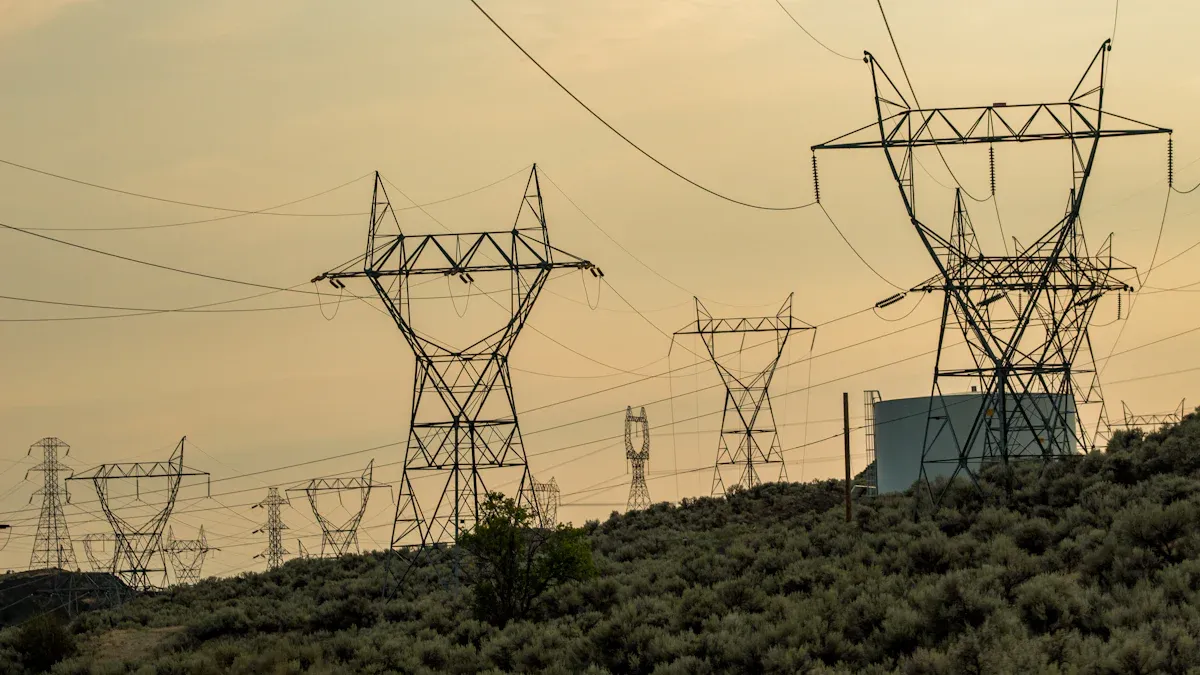
Power transmission and distribution systems can have too much voltage. Lightning and switching surges often cause these problems. Zinc oxide lightning arresters help protect transformers and circuit breakers. They work quickly and keep voltage at safe levels. The arrester sends extra surge current to the ground. This helps the system keep working and stops expensive damage.
Some common uses are:
Medium-voltage systems
Distribution transformers and capacitor banks
Reclosers and aerial-underground transitions
AC and DC traction systems
The table below shows where zinc oxide lightning arresters are used most:
Application Area | Main Threat | Role of Arrester |
|---|---|---|
Transmission Lines | Lightning, switching | Sends surge to ground |
Substations | Over-voltage events | Protects transformers, breakers |
Distribution Networks | Lightning | Shields underground equipment |
Factories and businesses use zinc oxide lightning arresters for protection. These arresters keep machines and wiring safe. They also protect electronics and renewable energy systems. Wind farms and solar parks use them too. Water treatment plants and electric car charging stations need them for safety.
Some main uses are:
Industrial machinery and control panels
Computer and telecom systems
Renewable energy inverters and solar arrays
Smart grid and EV charging infrastructure
Zinc oxide arresters work well in loud places. They handle lots of switching and electrical noise. Their design stops rust and stands up to high heat. This makes them good for tough industrial jobs.
Zinc oxide lightning arresters give strong over-voltage protection. They react fast to lightning and switching surges. Their special core takes in lots of energy and stops damage. The outside keeps out water, salt, and sunlight. Metal parts and special mounts help spread heat and keep the arrester cool.
Real-world use shows they last a long time. Many work for over 25 years, even in tough places. New arresters need little care and almost never break. They protect power grids, factories, and renewable energy sites. This makes them a great choice for stopping over-voltage.
Note: Zinc oxide lightning arresters keep voltage safe and lower equipment failures. They work in many places and help deliver power reliably.
Zinc oxide surge arresters are special because they use metal oxide varistors. These varistors have grain boundaries and special dopants. This helps them take in energy and react fast to voltage spikes. Experts say zinc oxide makes power grids strong and steady. Many companies like that the equipment is smaller and safer. Upgrades are easier, and systems are safer too. New designs last longer and do not need much fixing. The table below shows how zinc oxide surge arresters do better than others:
Feature | Zinc Oxide Surge Arresters | Alternatives |
|---|---|---|
Service Life | Long | Shorter |
Maintenance | Low | Higher |
Energy Absorption | High | Lower |
Engineers keep making zinc oxide materials better for the future. They work on smart monitoring and green ways to make them. Zinc oxide surge arresters help keep electrical systems safe and ready for new things.
Zinc oxide reacts to surges much faster. It can take in more energy than silicon carbide. It does not need series gaps to work. It lasts longer and needs less fixing. Many engineers pick it for new electrical systems.
Most zinc oxide surge arresters last from 10 to 25 years. Good seals and strong parts help them work in bad weather. Checking them often helps them last as long as possible.
Yes. Zinc oxide surge arresters act fast when lightning hits. They send the dangerous current safely into the ground. This keeps equipment safe during storms.
No. Zinc oxide surge arresters do not need much care. Most work well for many years. Simple checks for leaks or outside damage help keep them safe.
People use them on power lines, in substations, and in factories. They also protect renewable energy sites. They keep transformers, machines, and electronics safe from too much voltage.


